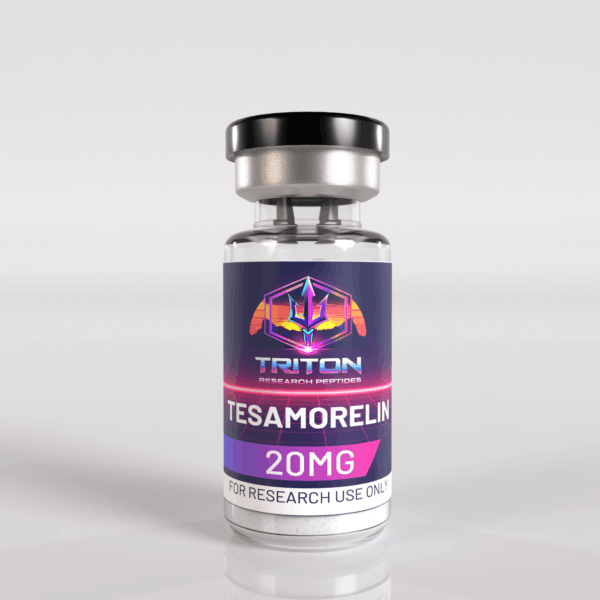
TESAMORELIN
Tesamorelin is a synthetic peptide designated for research and laboratory applications. It is structurally derived from the human gonadotropin-releasing hormone (GnRH) family, specifically designed to evaluate its biological activity within controlled scientific environments. This peptide is used in academic, pharmaceutical, and biotechnology research to study hormonal regulation, reproductive biology, and potential therapeutic mechanisms. As a research-use-only (RUO) compound, Tesamorelin is intended solely for experimental investigation and not for therapeutic, diagnostic, or cosmetic purposes.
Research Context
Tesamorelin belongs to the class of peptides known as GnRH analogs, which have been extensively studied for their effects on reproductive endocrine function. While naturally occurring GnRH triggers the release of luteinizing hormone (LH) and follicle-stimulating hormone (FSH), analogs like Tesamorelin can modulate hormonal responses through agonistic or antagonistic mechanisms, depending on the context of study. Research involving Tesamorelin often focuses on its potential applications in hormonal research, contraception, and cancer therapy, although these applications remain investigational and are not yet approved for clinical use.
Research Overview
Tesamorelin’s primary role in research settings is to provide a controlled stimulus for studying GnRH-mediated pathways. Studies may include investigating its effects on pituitary function, reproductive cycles, and its potential interaction with other hormonal systems. Due to its synthetic nature, Tesamorelin offers precision in dosing and administration, enabling researchers to assess dose-dependent responses in animal models or cell cultures. It is commonly used in conjunction with other biochemical assays, imaging techniques, and genetic studies to elucidate underlying mechanisms of hormone action.
Key Research Focus Areas
- Hormonal Regulation: Evaluation of Tesamorelin’s impact on pituitary-gonadal axis dynamics, including modulation of LH and FSH secretion, which is crucial for understanding reproductive physiology.
- Reproductive Biology: Investigation of its effects on reproductive cycles, ovarian function, and fertility in experimental models, particularly in studies of contraception or assisted reproductive technologies.
- Endocrine Cancer Research: Potential use in preclinical studies of gonadotropin-dependent cancers, such as prostate cancer, where GnRH analogs are being explored as therapeutic agents.
- Pharmacological Profiles: Characterization of its binding affinity, metabolic stability, and pharmacokinetics in vitro and in vivo to optimize its use in research applications.
- Cross-Species Studies: Analysis of Tesamorelin’s effects in non-human models (e.g., rodents, primates) to correlate findings with human physiological responses, particularly in reproductive or hormonal research.
Safety and Compliance Considerations
Tesamorelin is supplied for research purposes only and is intended exclusively for academic, pharmaceutical, or biotechnological laboratories. It must be handled with the same strict adherence to safety protocols as any other research chemical, including proper storage, disposal, and containment measures. Researchers must ensure compliance with all applicable regulatory guidelines, including those governing the storage, distribution, and use of peptides in their respective jurisdictions. Failure to adhere to these protocols may result in legal or ethical consequences.
This product is not intended for human or animal consumption. The information provided herein is for scientific and educational purposes only, and users are advised to consult their institution’s research guidelines and regulatory authorities before handling Tesamorelin. Always conduct experiments in accordance with established laboratory safety standards and institutional review board (IRB) or ethics committee approvals, if applicable.
For research use only. Not for human or animal consumption.
| Size | 10MG, 20MG |
|---|